Our family shop has served McMinnville since 1979, with transmission experience dating back to 1976. Owner Bo McCracken personally diagnoses and rebuilds transmissions, and our team handles qualifying U-joint and driveline repair for many domestic and Asian vehicles.
If your truck or SUV is clunking, vibrating, or making an unusual noise, call (931) 473-5302 to discuss your vehicle and the appropriate next step.
What Are U-Joints, and What Do They Do?
A universal joint allows a driveshaft to transfer rotational power while operating at an angle. U-joints are common in rear-wheel-drive and four-wheel-drive vehicles, particularly trucks and SUVs with driveshafts connecting the transmission or transfer case to the differential.
As the suspension moves, the angles between drivetrain components can change. U-joints allow the driveshaft to accommodate those changes while continuing to transfer power.
A typical cross-style U-joint uses bearing caps and internal needle bearings. When the bearings wear, lose lubrication, or become damaged, the joint may develop excessive movement, stiffness, or binding.
Not every vehicle uses the same driveline design. Some use different joint arrangements or CV-style driveshaft connections, so the correct repair depends on the vehicle.
Common Signs of Worn or Failing U-Joints
Clunking When Shifting Into Drive or Reverse
A clunk when shifting between drive and reverse can be a sign of excess movement in a U-joint or another driveline connection. As the direction of torque changes, worn components may move enough to create an audible knock.
However, a similar clunk may come from differential wear, mounts, or other drivetrain components. The sound should be traced before assuming a U-joint is responsible.
Vibration During Acceleration or at Highway Speeds
A worn or damaged U-joint can contribute to driveshaft vibration, sometimes becoming more noticeable at particular road speeds or under load.
Because the driveshaft rotates whenever the drivetrain is transmitting power, a problem with its joints or related components may produce a vibration felt through the floor or seat.
Tire and wheel problems, driveshaft balance concerns, differential wear, and other mechanical issues can create similar symptoms. Vibration alone does not confirm a U-joint failure.
Squeaking or Chirping Noises
Some worn U-joints produce a repeated squeak or chirp as the driveshaft rotates. The sound may change with vehicle speed and can sometimes appear before more obvious clunking or vibration develops.
Other rotating components can make similar noises, so the location and operating conditions matter.
Excessive Play or Binding
A U-joint may develop unwanted movement as its bearings wear. In other cases, corrosion or internal damage may cause the joint to become stiff or bind rather than move smoothly.
Both conditions can interfere with normal driveline operation. The joint's condition and the surrounding components should be evaluated before deciding on replacement.
What Happens If a Bad U-Joint Is Ignored?
A severely worn U-joint can place additional stress on connected drivetrain components. Depending on the design and severity of the failure, the problem may affect the driveshaft, transmission output connection, transfer case, or differential input.
In an extreme failure, a driveshaft connection may separate, creating a serious safety hazard and potentially damaging the vehicle.
Not every noisy U-joint is at that stage, but unusual clunking, severe vibration, or signs of significant joint movement should not be ignored.
If the vehicle develops severe vibration or you suspect the driveshaft connection is failing, avoid continued driving until the problem has been evaluated.
How We Approach U-Joint and Driveline Diagnosis
When a customer describes a clunk or vibration, one of the first questions is when it happens. Does the noise occur when shifting into gear, when accelerating from a stop, or while driving at a steady speed? Does the vibration change when you release the accelerator?
These details help narrow down which components may be involved.
Depending on the vehicle and symptoms, evaluating the driveline may involve inspecting accessible U-joints and driveshaft connections, checking for unusual movement or binding, and considering the condition of related components.
Because sound and vibration can travel through the drivetrain, the problem may not be located exactly where the driver feels it. Our Transmission Diagnostics page explains why identifying the source is important before recommending major work.
U-Joint Replacement and Driveline Repair Options
When a U-joint is worn or damaged, replacement may be appropriate if the joint is serviceable and the surrounding driveshaft components are in suitable condition.
Some driveshaft assemblies use replaceable U-joints, while others have designs that require a different repair approach. The condition of the driveshaft yokes, bearing surfaces, and related components can affect what work is practical.
If a driveshaft has been damaged or another component is involved, the repair options may be different from a straightforward U-joint replacement.
McMinnville Transmission handles qualifying U-joint and driveline repairs. We do not advertise custom driveshaft fabrication or specialized balancing services without confirming that work is available.
U-Joint Problems vs. Differential and CV Axle Problems
A U-joint is only one possible source of a drivetrain noise.
A differential problem may cause whining, humming, or clunking that seems to come from the driveshaft. A CV axle or CV joint concern may cause clicking during turns or vibration under acceleration, particularly on vehicles using those components.
On four-wheel-drive trucks, the transfer case and additional driveshaft connections can also contribute to noise or vibration.
Understanding how these parts work together helps determine where the problem begins. For related concerns, explore our Differential & Rear-End Repair, CV Axles & CV Joints, and Transfer Case Repair, Rebuild & Replacement pages.
U-Joint and Driveline Repair for Trucks and SUVs
U-joints are common on many rear-wheel-drive and four-wheel-drive vehicles, including certain Ford F-150, Ranger, and Expedition models; Chevrolet Silverado and GMC Sierra trucks; and Dodge and Ram pickups.
The number and type of joints can vary depending on the driveshaft design, wheelbase, drivetrain configuration, and model year. Some trucks use multiple driveshaft sections or additional support components.
McMinnville Transmission works on many domestic and Asian vehicles, but not every model or driveline design. We do not service European vehicles.
Call with your vehicle's year, make, model, and symptoms so we can confirm whether the work is within our service scope.
A Family Shop That Looks for the Actual Problem
McMinnville Transmission's history began when Charlie Cooper helped teach Chuck McCracken the transmission trade. Chuck opened his shop in Smithville in 1976 and moved the business to McMinnville in 1979.
Chuck's son Bo joined the shop in 1997 and took over daily operations when Chuck became seriously ill in 2002. Chuck passed away in 2004, but the approach he taught Bo remains part of the shop today.
One of Chuck's lessons was, “Don't tell somebody they need a transmission unless you're sure they need a transmission.”
That matters when a truck arrives with a clunk or vibration. A worn U-joint should not be mistaken for a failed transmission, and a transmission problem should not be blamed on the driveshaft without identifying the cause.
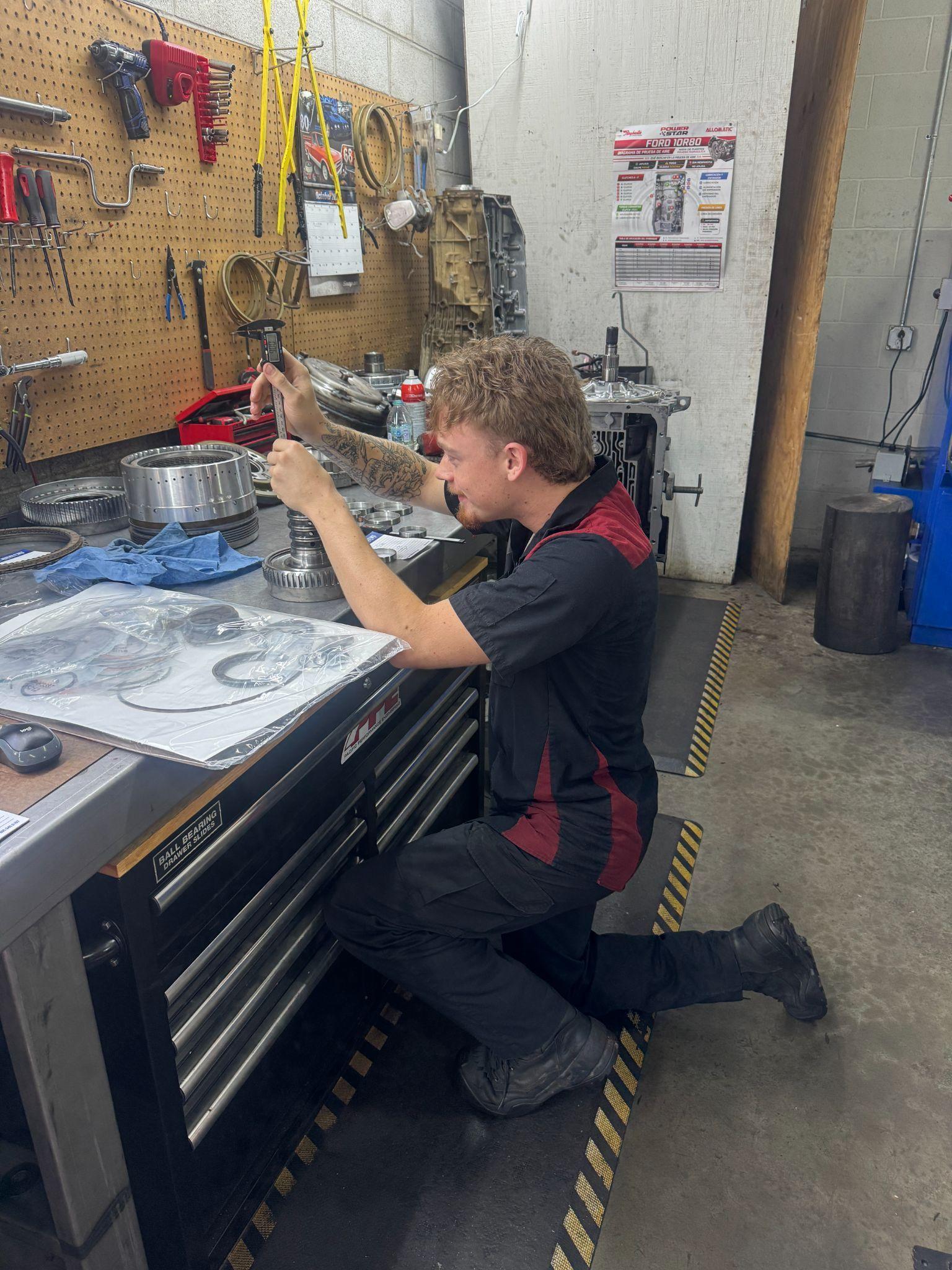
Today, Bo personally diagnoses and rebuilds transmissions. His cousin Jeff Kemper has more than 20 years of experience with removal, installation, scanning, and test drives. Bo's nephew Seth Cantrell is learning newer 6-speed, 8-speed, and 10-speed transmission rebuilding, while Connie McCracken helps customers in the front office.
Read more about the family on our About Us / Our Story page.
How Much Does U-Joint Replacement Cost?
The cost depends on the vehicle, the number and type of joints involved, the driveshaft design, and the condition of the surrounding components.
A serviceable U-joint replacement may involve different work from a damaged driveshaft assembly or a problem involving multiple components.
Rather than advertising one price for every vehicle, we recommend identifying the failed component and confirming the appropriate repair.
Schedule U-Joint & Driveline Repair in McMinnville, TN
If your truck clunks when shifting, vibrates during acceleration, or makes an unfamiliar noise from underneath the vehicle, contact McMinnville Transmission.
We're located at 1703 S. Chancery St., McMinnville, TN 37110, serving McMinnville and Warren County, as well as nearby Smithville, Sparta, Woodbury, Manchester, and surrounding communities.
Call (931) 473-5302 with your vehicle's year, make, model, and symptoms. Tell us whether the problem occurs when shifting into gear, accelerating, or driving at a steady speed.
Visit Contact & Directions or return to our complete Drivetrain Services.