Our family transmission shop has served McMinnville since 1979. Owner Bo McCracken personally diagnoses and rebuilds transmissions, and the shop also handles qualifying CV axle and drivetrain work for many domestic and Asian vehicles.
If your vehicle is clicking during turns or vibrating under acceleration, call (931) 473-5302 with your year, make, model, and symptoms.
What Are CV Axles and CV Joints?
CV stands for constant velocity. A CV joint allows an axle shaft to transfer power while operating at changing angles, which is important as the suspension moves and, on steering axles, as the wheels turn.
Most conventional CV axle assemblies have an inner joint and an outer joint. The outer joint accommodates steering angles, while the inner joint also allows movement associated with suspension travel. Their exact designs vary by vehicle.
CV axles are common on front-wheel-drive cars and many all-wheel-drive vehicles. They're also found in certain trucks and SUVs with independent suspension.
Each joint is normally protected by a flexible boot containing grease. When a boot tears, grease can escape and dirt or moisture can enter, increasing the risk of joint wear.
Common Signs of a Bad CV Axle or CV Joint
Clicking or Popping When Turning
A repeated clicking noise during turns is one of the most recognizable symptoms of a worn outer CV joint. It may become more noticeable during tighter turns, especially when the vehicle is accelerating.
The sound can develop as wear affects the joint's internal components. However, clicking during a turn can also involve other parts of the steering, suspension, or drivetrain.
Pay attention to whether the noise occurs only when turning, whether it changes with acceleration, and which side of the vehicle it seems to come from. These details can help guide diagnosis.
Vibration During Acceleration
A worn or damaged inner CV joint can sometimes contribute to vibration or shuddering during acceleration. Depending on the problem, the vibration may be more noticeable under load and become less apparent when the driver releases the accelerator.
However, not every vibration is a CV axle problem. Tires, wheels, engine mounts, transmission concerns, and other drivetrain components can produce similar symptoms.
Our Transmission Diagnostics page explains why finding the cause matters before replacing parts.
Torn CV Boots or Leaking Grease
A CV boot is designed to keep grease inside the joint and contaminants outside. Over time, a boot may crack, split, or become damaged.
You might notice grease around the inside of a wheel, on nearby suspension components, or along the underside of the vehicle. A torn boot does not always mean the joint has already failed, but it does leave the joint vulnerable to wear.
The appropriate repair depends on the condition of the joint, the extent of contamination, and whether separate components are available for that axle design.
Clunking or Unusual Movement
Some axle and joint problems can cause clunking or other noises when the vehicle changes direction or the drivetrain takes up load.
These symptoms can overlap with worn mounts, differential components, or other driveline concerns. An inspection helps determine whether the CV axle is actually responsible.
CV Boot Repair vs. CV Axle Replacement
A damaged CV boot and a worn CV joint are not necessarily the same problem. If a boot is torn but the joint remains in suitable condition, the available repair options may differ from those for a joint that has already developed significant wear.
Depending on the vehicle, a separate boot or joint repair may be possible. In other cases, replacing the complete CV axle assembly may be more practical because of the axle design, parts availability, labor involved, or condition of the joint.
If the joint is already clicking, binding, or showing substantial wear, simply installing a new boot will not correct that internal damage.
The right choice depends on the actual condition of the axle and the repair options available for the specific vehicle.
Can a Bad CV Axle Feel Like a Transmission Problem?
Yes. CV axles connect the transmission or transaxle to the driving wheels on many vehicles, so a problem with an axle can sometimes feel like it originates in the transmission.
For example, vibration during acceleration may lead a driver to suspect slipping or shuddering inside the transmission. A clunk during a change in load may also be mistaken for a transmission engagement problem.
That doesn't mean every suspected transmission problem is caused by an axle. The symptoms, vehicle design, and condition of related components all matter.
McMinnville Transmission approaches these concerns by identifying which component is responsible before discussing major repair work. Learn more about our broader Drivetrain Services.
CV Axle Repair for Domestic and Asian Vehicles
CV axles are found in many vehicles we commonly discuss with customers, including appropriate Nissan, Honda, Mazda, Mitsubishi, Ford, Chevrolet, and GMC models.
Certain Nissan Altima and Sentra, Honda Civic and Accord, Mazda3, and Mitsubishi vehicles use front CV axle assemblies. Other cars, crossovers, and trucks may have different axle arrangements depending on whether they are front-wheel drive, rear-wheel drive, or all-wheel drive.
A CV axle for one model year or drivetrain configuration may not fit another. Joint designs, axle lengths, splines, and other specifications can differ.
McMinnville Transmission works on many domestic and Asian vehicles, but not every model or axle configuration. We do not service European vehicles. Call with your year, make, and model so we can confirm whether we handle your vehicle.
Why Related Drivetrain Components Matter
An axle doesn't operate independently of the rest of the drivetrain. It connects with components that transfer power to the wheels, and problems elsewhere can sometimes create similar noises or vibrations.
For example, a differential concern may produce humming or unusual drivetrain movement, while a worn driveshaft U-joint may cause clunking or vibration on vehicles equipped with that type of driveline.
If the symptoms suggest another component, the repair discussion should follow the evidence rather than automatically replacing a CV axle.
For related concerns, visit Differential & Rear-End Repair or U-Joints & Driveline Repair.
Generations of Experience, One Approach to Diagnosis
McMinnville Transmission's family history began with Charlie Cooper teaching Chuck McCracken the transmission trade. Chuck opened his shop in Smithville in 1976 and moved the business to McMinnville in 1979.
Chuck's son Bo joined the shop in 1997 and took over daily operations when Chuck became seriously ill in 2002. Chuck passed away in 2004, but his approach to diagnosing problems continued through Bo.
One of Chuck's lessons was, “Don't tell somebody they need a transmission unless you're sure they need a transmission.”
That principle matters when a customer comes in with a clicking noise or vibration. A worn CV axle should not be mistaken for a failed transmission, and a transmission problem should not be blamed on an axle without identifying the cause.
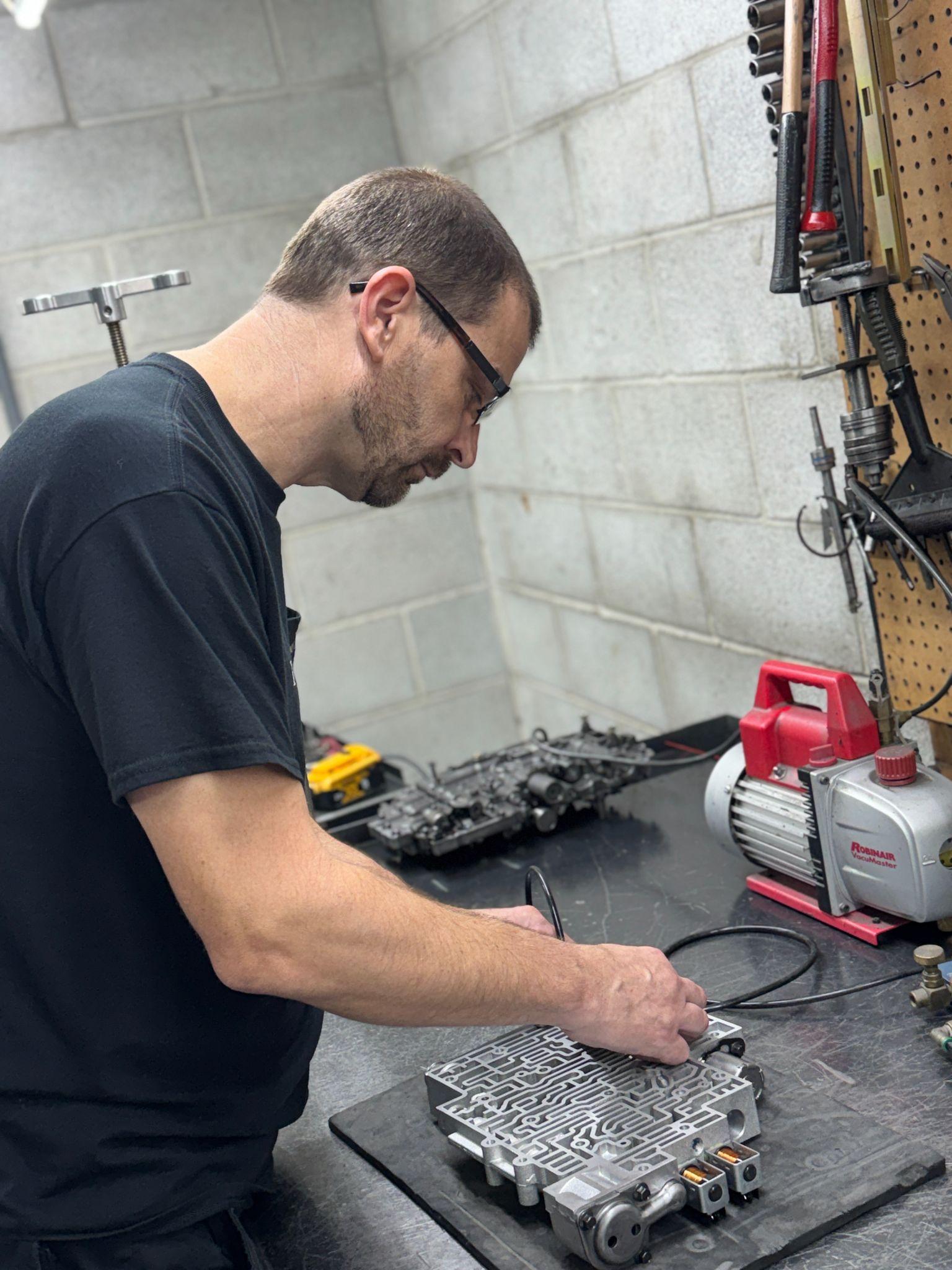
Today, Bo personally diagnoses and rebuilds transmissions. His cousin Jeff Kemper brings more than 20 years of experience with removal, installation, scanning, and test drives. Bo's nephew Seth Cantrell is learning newer 6-speed, 8-speed, and 10-speed transmission rebuilding, while Connie McCracken helps customers in the front office.
Read more about the family on our About Us / Our Story page.
How Much Does CV Axle Replacement Cost?
The cost depends on the vehicle, which axle is affected, the parts required, and the labor involved.
Some vehicles allow relatively straightforward axle replacement, while others have designs that require additional work to access or remove the assembly. The available repair options also depend on whether the problem involves a boot, joint, or complete axle.
Rather than quoting one price for every vehicle, we recommend identifying the failed component and confirming the correct parts before discussing the repair.
Schedule CV Axle & CV Joint Service in McMinnville, TN
If your car clicks during turns, vibrates when accelerating, or has a torn CV boot, contact McMinnville Transmission to discuss the problem.
We're located at 1703 S. Chancery St., McMinnville, TN 37110, serving McMinnville and Warren County, as well as nearby Smithville, Sparta, Woodbury, Manchester, and surrounding communities.
Call (931) 473-5302 with your vehicle's year, make, model, and symptoms. Let us know whether the noise occurs while turning, accelerating, or driving at a steady speed.
Visit Contact & Directions, or explore our complete Drivetrain Services.