Modern automatic transmissions depend on electronic controls, sensors, wiring, and solenoids to manage shifting. A problem in one of those systems can create symptoms that feel like major mechanical failure, even when the underlying cause is different.
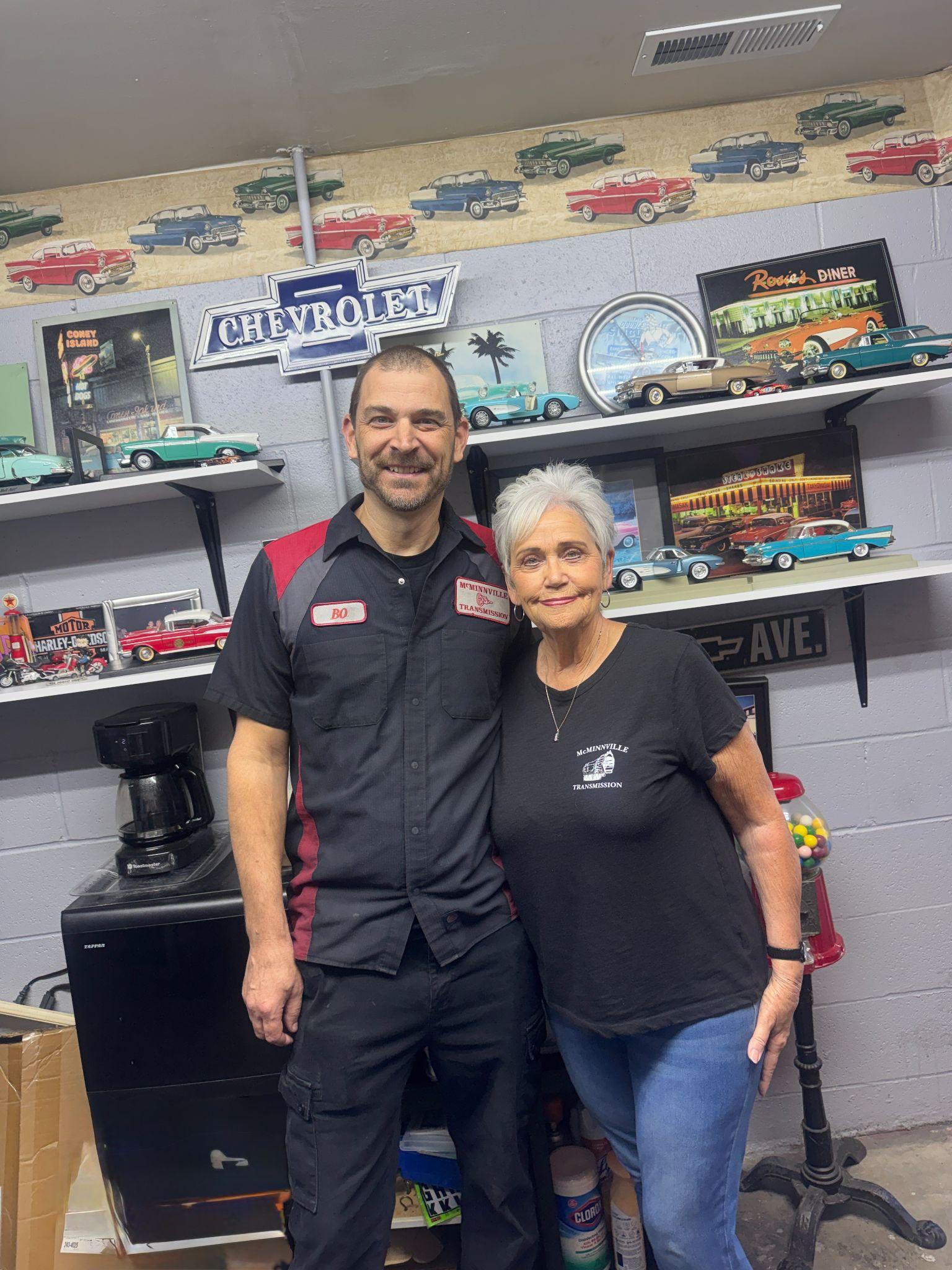
At McMinnville Transmission, owner Bo McCracken personally diagnoses and rebuilds transmissions. Our family shop has served McMinnville since 1979, and we believe that identifying the actual problem should come before recommending major repairs.
If your vehicle has transmission trouble codes, unusual shifting, or a suspected electrical problem, call (931) 473-5302 to discuss the symptoms and your vehicle's year, make, and model.
How Electronics Control an Automatic Transmission
An automatic transmission uses more than gears and clutches to change speeds. Depending on the vehicle, its electronic control system monitors information such as engine load, throttle input, transmission speed, fluid temperature, and selected gear.
A transmission control module, or a control function integrated into another vehicle module, uses that information to command shifts and manage certain transmission operations.
Solenoids are electrically controlled components that help regulate hydraulic fluid flow or pressure inside many automatic transmissions. By controlling hydraulic circuits, the system can influence gear engagement, shift timing, and other functions.
When an electrical signal is missing, incorrect, or interrupted, the transmission may not operate as intended. However, similar symptoms can also result from hydraulic pressure problems or worn internal components, which is why diagnosis matters.
Signs of Transmission Electrical or Solenoid Problems
Hard, Delayed, or Erratic Shifting
A transmission that shifts unusually hard, hesitates before changing gears, or shifts at unexpected times may have an electronic control concern. Depending on the transmission, a solenoid, sensor, wiring fault, or control problem could contribute to the symptom.
These behaviors can also occur with internal mechanical wear or hydraulic faults. The way the transmission behaves, along with diagnostic information, helps narrow down the possibilities.
Transmission Stuck in One Gear
Some vehicles enter a protective operating mode when the control system detects certain faults. This may limit available gears or change how the transmission shifts.
Drivers sometimes call this limp mode. It can be associated with electrical faults, but the presence of limp mode does not identify a specific failed component.
Check Engine Light or Transmission Warning
A warning light may appear when a vehicle detects an abnormal condition in the transmission control system. Some vehicles display a dedicated transmission warning, while others use the check engine light.
The stored trouble codes provide useful clues, but they are a starting point rather than a complete diagnosis.
Intermittent Shifting Problems
Electrical problems can sometimes appear and disappear. A loose connection, damaged wire, or temperature-related fault may create symptoms that are difficult to reproduce consistently.
When a customer can describe when the problem happens, such as after the vehicle warms up or during a particular shift, that information can help guide the evaluation.
Does a Transmission Solenoid Code Mean the Solenoid Is Bad?
No. A solenoid-related trouble code does not automatically prove that the solenoid itself has failed.
A code indicates that the vehicle's control system detected a condition outside its expected range. Depending on the code, that condition might involve an electrical circuit, unexpected transmission performance, or a difference between commanded and actual operation.
For example, a shift-solenoid circuit code may lead to investigation of the solenoid, wiring, connectors, power supply, or control system. A shift-performance code may require consideration of hydraulic pressure and internal transmission operation as well.
Replacing a solenoid solely because its name appears in a code description can miss the real problem. Our broader Transmission Diagnostics service focuses on understanding what the diagnostic information actually means.
Transmission Wiring, Connectors, and Sensors
Transmission electrical problems do not always originate inside the transmission.
Wiring harnesses can develop damage, connectors may become loose or corroded, and electrical connections can be affected by moisture or other conditions. Depending on the vehicle, faults involving speed sensors, temperature sensors, or related signals may also affect shifting.
An incorrect sensor reading can influence how the control system responds, even when the transmission's internal mechanical components are not the original cause.
The appropriate diagnostic process depends on the vehicle and fault. It may involve reviewing stored codes and operating data, examining accessible wiring or connectors, and considering electrical testing where appropriate.
Shift Solenoids, Pressure Control, and Valve Bodies
Many automatic transmissions use multiple solenoids to control different hydraulic functions. Some direct fluid through specific circuits, while others help regulate pressure.
Solenoids may be located within a valve body or another internal control assembly. Their accessibility and replacement options vary considerably between transmission designs.
A problem involving a solenoid can sometimes be addressed through a targeted repair. In other cases, the fault may involve the valve body, internal wiring, hydraulic operation, or additional transmission components.
Not every transmission allows an individual solenoid to be replaced separately. Some designs use integrated assemblies that require a different repair approach.
For a closer look at repair options, visit our Automatic Transmission Repair page.
Transmission Control Modules, Programming, and Relearn Procedures
Electronic transmission operation may also depend on software, learned shift adaptations, and communication between vehicle modules.
On certain vehicles, replacing a control component or performing specific transmission work may require a manufacturer-defined programming, calibration, or relearn procedure. The requirements depend on the transmission and vehicle.
These procedures are not interchangeable, and not every shifting problem can be corrected with a reset or relearn.
McMinnville Transmission evaluates qualifying electronic transmission concerns and can discuss what is appropriate for the specific vehicle. Specialized programming availability must be confirmed rather than assumed.
Can an Electrical Problem Feel Like a Failed Transmission?
Absolutely. A control system that commands incorrect pressure or cannot operate a shift circuit properly may cause harsh engagement, delayed shifts, or other symptoms that drivers associate with transmission failure.
The opposite is also possible. Internal clutch wear, hydraulic leakage, or mechanical damage may produce operating conditions that trigger electronic fault codes.
That distinction is important because an electrical repair cannot correct worn internal clutches, just as rebuilding a transmission may not resolve an external wiring problem.
When internal damage is confirmed, our Transmission Rebuilding service may be an appropriate option. But rebuilding should follow the findings, not be the automatic answer to a warning light.
Electronic Transmission Problems in Ford, Chevrolet, GMC, Dodge, Ram, and Asian Vehicles
Modern automatic transmissions used in domestic trucks and Asian cars rely on increasingly sophisticated electronic controls.
Examples include certain Ford vehicles equipped with 6R80 or 10R80 transmissions, Chevrolet and GMC trucks using 6L80, 8L90, or 10L80 transmissions, and Ram trucks with electronically controlled automatic transmissions.
Many Nissan, Honda, Mazda, and Mitsubishi vehicles also use electronic transmission controls. Some continuously variable transmissions, or CVTs, have their own control systems and diagnostic requirements.
These examples describe transmission families and vehicle types, not a promise that every version or electronic repair is supported.
McMinnville Transmission works on many domestic and Asian vehicles, but not every year, model, or transmission design. We do not service European vehicles. Call with your vehicle information so we can confirm whether the concern is within our service scope.
A Family Shop Built on Diagnosing Before Replacing
McMinnville Transmission's story began when Charlie Cooper taught Chuck McCracken the transmission trade. Chuck opened his shop in Smithville in 1976 and moved the business to McMinnville in 1979.
Chuck's son Bo joined the shop in 1997 and took over daily operations when Chuck became seriously ill in 2002. Even while Chuck was in the hospital, Bo sometimes called him to discuss difficult transmission problems. Chuck passed away in 2004, but his approach to diagnosis continued through Bo.
One of Chuck's lessons was, “Don't tell somebody they need a transmission unless you're sure they need a transmission.”
That principle is especially relevant when a customer arrives with a solenoid code or an electronic shifting complaint. A trouble code should not automatically become a recommendation for a complete transmission replacement.
Today, Bo personally diagnoses and rebuilds transmissions. His cousin Jeff Kemper has more than 20 years of experience with removal, installation, scanning, and test drives. Bo's nephew Seth Cantrell is learning newer 6-speed, 8-speed, and 10-speed transmission rebuilding, while Connie McCracken helps customers in the front office.
Read more about the family on our About Us / Our Story page.
How Much Does Transmission Solenoid Repair Cost?
The cost depends on the vehicle, the transmission design, the cause of the fault, and the work required to access and repair the affected component.
An external wiring problem may involve different work from a solenoid located inside the transmission. Some repairs may require removing a transmission pan or valve body, while others may involve a larger integrated assembly.
The presence of a trouble code alone is not enough to determine the cost. The appropriate repair should be based on the identified problem and the available parts.
Get Help With Transmission Electrical Problems in McMinnville, TN
If your vehicle is shifting hard, staying in one gear, displaying a transmission warning, or showing a solenoid-related trouble code, contact McMinnville Transmission.
We're located at 1703 S. Chancery St., McMinnville, TN 37110, serving drivers from McMinnville and Warren County, as well as nearby Smithville, Sparta, Woodbury, Manchester, and surrounding communities.
Call (931) 473-5302 with your vehicle's year, make, model, and symptoms. If another shop or code reader provided a trouble code, let us know what it was.
Visit Contact & Directions or explore our complete Transmission Services.